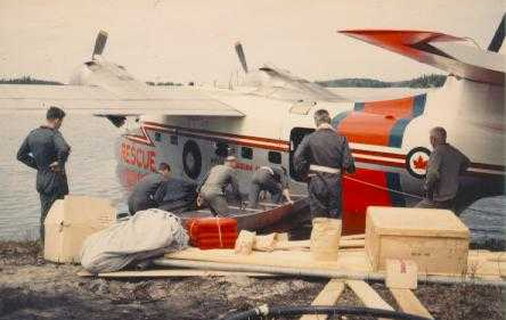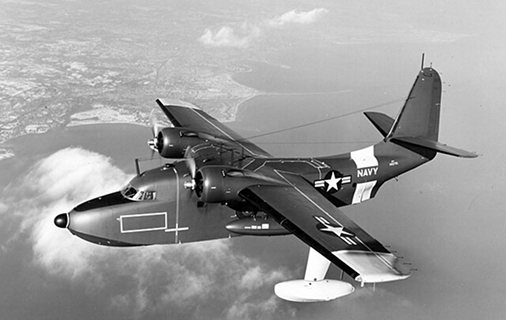
The Albatross served everywhere — rescuing airmen in Alaska, patrolling Vietnam’s rivers, and connecting Pacific villages.
No single theater could contain the Albatross's career – it flew wherever water met sky. Its missions spanned polar ice to tropical reef, combat zones to peaceful villages. In Greenland it landed on glacial lakes to medevac stranded scientists; in Alaska it patrolled icy seas for downed bush pilots. During the Vietnam War, USAF and Navy Albatrosses operated along the Mekong Delta and coastal rivers, plucking wounded airmen from rice paddies when helicopters could not. At home, they flew hurricane relief and even tracked icebergs for the Coast Guard. From delivering supplies to Antarctic stations to carrying survey teams across Pacific atolls, the Albatross proved amphibious aviation was a global solution.
Greenland 1958: An explorer broke his leg on a remote arctic lake. A USAF SA-16 landed on the frozen surface under the midnight sun. Its crew helped the wounded man aboard and carried him safely 800 miles back to Thule for treatment.
Vietnam 1967: A Navy Albatross spotted an F-4 Phantom's parachuting pilot along the Mekong River. Landing nearby, the crew rescued the pilot from hostile shore with calm precision – a feat impossible for helicopters under heavy enemy fire.
Pacific 1970: Under Trust Territory Airlines colors, an Albatross shuttled doctors and vaccines between Micronesian islands. When a smallpox outbreak struck Yap, the seaplane brought medical teams and relief supplies, reaching villages cut off by reef and rough surf.
Atlantic 1962: An SA-16 flew from Europe to Cape Kennedy during the Aurora 7 space mission. It reached astronaut Scott Carpenter's splashdown point before any helicopter, hovering until Navy divers arrived. Though it could not land in the choppy waters, its range and speed allowed constant surveillance.
Arctic to Tropics: In World War II and after, Coast Guard Albatrosses served on the Aleutian islands and the Aleutian isles to the southern Caribbean. Wherever seas were open, the Albatross could land; where only ice or coral existed, it flew in anyway. This unmatched global footprint proved amphibious flight was no niche luxury but a strategic necessity. Its legend lives on in every sea and sky map the Albatross once traversed.